


Urinary tract infections (UTIs) are among the most common bacterial infections, affecting 150 million people each year worldwide[1] and 50 times more women than men.
Why are women more affected than men?
Women are more prone to urinary infections because their shorter urethra makes it easier for bacteria to reach the bladder. Intestinal or vaginal imbalances can also encourage bacterial growth. Other factors such as sexual intercourse, pregnancy, oral contraceptives, fatigue, constipation, and digestive candidiasis may increase the risk.
UTIs commonly cause pain, stinging, or burning during urination and are most often caused by Escherichia coli (E. coli). The infection may affect the urethra and bladder (cystitis) and, in more severe cases, spread to the kidneys (pyelonephritis).
Antibiotics can effectively treat UTIs, but recurrences remain common.
Why such a high recurrence rate?
During a UTI, Escherichia coli can attach to the bladder lining and hide within bladder cells, making it harder for the immune system and antibiotics to eliminate completely. After treatment, the bacteria may re-emerge and cause another infection. Recurrences are common, with some women experiencing multiple episodes.
Prevention is therefore essential. Drinking enough water, urinating after intercourse, avoiding holding urine, and supporting urinary health can help reduce the risk of recurrence.


White nettle has long been valued for its remineralising and restorative properties. Rich in minerals and vitamins, it supports urinary health and may promote renal elimination. Its phytosterols and phenolic compounds may also help maintain the urinary tract and support the prevention of kidney stone formation.
Unlike couchgrass, white nettle’s diuretic action is more targeted: it stimulates urine production when the body needs to eliminate excess nitrogenous waste, while its mineral content supports kidney function.
Studies have also shown that white nettle may support prostate health and help relieve urinary symptoms associated with benign prostate enlargement (stages I and II)[10].

Cranberry has long been used in North America as a traditional remedy for urinary infections. Its benefits are linked to compounds such as proanthocyanidins, hippuric acid, fructose, and vitamin C, which may reduce the ability of E. coli to attach to the bladder wall. [2][3]
Studies suggest that cranberry can help prevent recurrent urinary infections, particularly in women, with anti-adhesive effects appearing within a few hours of consumption and lasting for several hours. [4][5][6]
Cranberry also contains various flavonoids with antioxidant properties, which help protect cells from oxidative stress and may support overall health.

Heather is traditionally known for its diuretic, urogenital antiseptic, and anti-inflammatory properties, making it particularly useful for supporting urinary health and conditions such as cystitis, colibacillosis, and inflammation of the urethra or prostate.
Its flavonoids and tannins contribute to its anti-inflammatory action and may help relieve pain associated with uncomplicated cystitis. Heather also contains arbutoside, which is converted in the kidneys into hydroquinone and has antibacterial properties. Studies have shown activity against urinary bacteria such as Escherichia coli and Staphylococcus aureus [7].
Its diuretic action promotes urinary elimination of toxins and excess uric and oxalic acids, while its antiseptic properties support the urinary tract. Heather is also traditionally combined with cranberry to help prevent recurrent UTIs.

Couchgrass has been traditionally valued for its diuretic properties and its ability to support the elimination of urinary stones. Although research is limited, animal studies have supported its traditional use in managing urinary lithiasis [8].
Rich in fructosans, couchgrass may stimulate diuresis and promote renal elimination, making it useful for supporting urinary health and reducing the risk of recurrence [9]. It may also help with water retention, such as oedema.
Couchgrass contains 5-OH-tryptophan, a precursor of serotonin involved in sleep, pain, and mood regulation. This may contribute to its relaxing properties, particularly during inflammatory episodes associated with urinary infections.
Each plant offers distinct properties, and combining them may provide a more comprehensive and synergistic approach to urinary health. However, plant-based complexes should be used with care. Due to variations in the composition of natural products, it is important to check the source, dosage, and concentration of active ingredients.

-
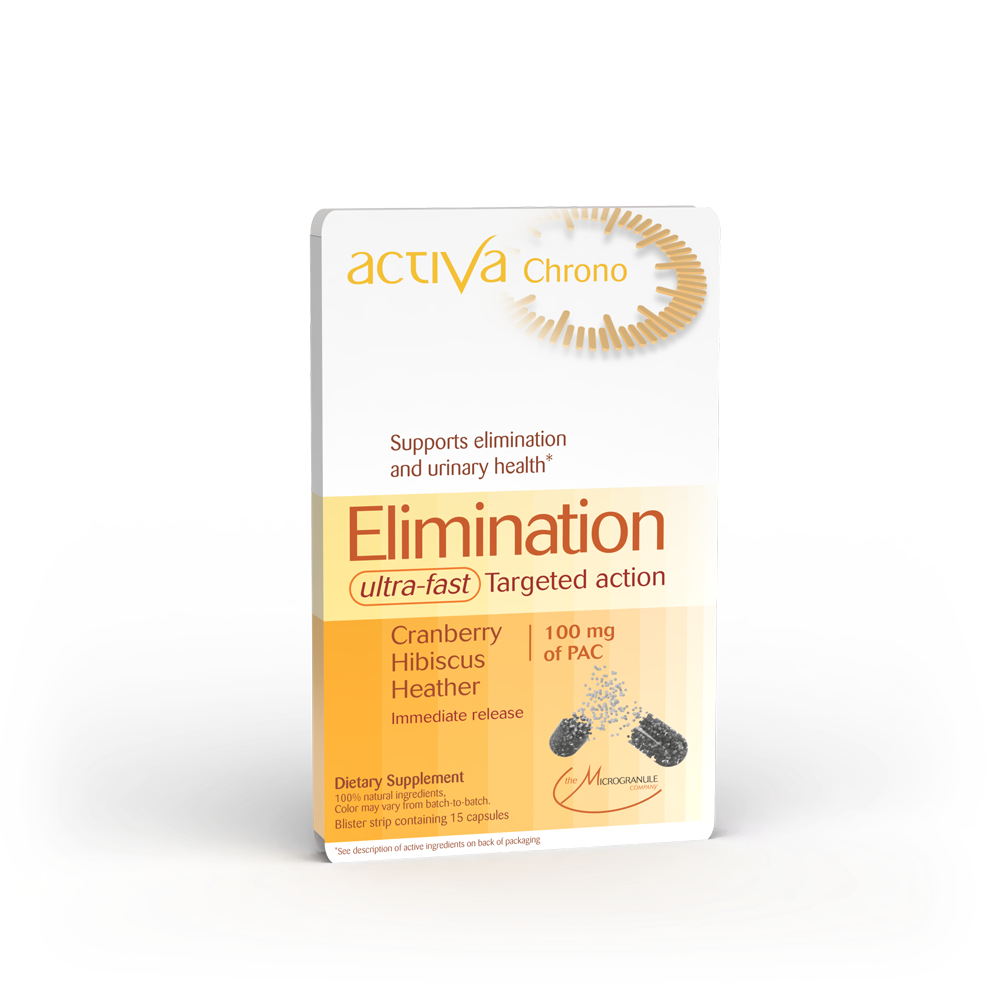
Chrono Elimination
$23.90
Your Vitality Store doesn’t intend to diagnose, always assess your health requirements by seeing a professional medical practitioner.
Images Source: DepositPhotos, Canva
Sources:
[1] Stamm WE, Norrby SR. Urinary tract infections: disease panorama and challenges. J Infect Dis. 2001;183 (Suppl 1):S1–S4. [PubMed]
[2] Avis de l’Afssa du 6 avril 2004, Saisine n°2003-SA-0352
[3] Howell AB, Foxman B. Cranberry Juice and Adhesion of Antibiotic-Resistant Uropathogens / JAMA (Journal of the American Medical Association) / volume:287 (page: 3082) June 19, 2002
[4] Marcelo Hisano, Homero Bruschini, Antonio Carlos Nicodemo, Miguel Srougi, Carnberries and lower urinary tract infection prevention , Clinics, Juin 2012; 67(6):661-667
[5] Kontiokari T, Sundqvist K, Nuutinen M, Pokka T, Koskela M, Uhari M. Randomised trial of cranberry-lingonberry juice and Lactobacillus GG drink for the prevention of urinary tract infections in women . BMJ. 2001;322:1571-1573
[6] Can J Urol, 2-Stothers, L. : A randomized trial to evaluate effectiveness and cost effectiveness of naturopathic cranberry products as prophylaxis against urinary tract infection in women . 2002 Jun;9(3):1558-62.
[7] Siegers C1, Bodinet C, Ali SS, Siegers CP Bacterial deconjugation of arbutin by Escherichia coli . Institute of Experimental and Clinical Pharmacology and Toxicology, University of Luebeck, Germany.International Journal of Phytotherapy and Phytoparmacology ; 2003, 10 Suppl 4:58-60.
[8] Grases F, Ramis M, Costa-Bauza A, March JG. Effect of Herniaria hirsuta and Agropyron repens on calcium oxalate urolithiasis risk in rats . J Ethnopharmacol . 1995;45:211-214.
[9] Rosso D. Biochimie et intérêt pharmaceutique des graminées : étude particulière des 2 chiendents Agropyron repens L., et Cynodon dactylon Rich.
[10] Schneider T, Rubben H. Stinging nettle root extract (Bazoton-uno) in long term treatment of benign prostatic syndrome (BPS). Results of a randomized, double-blind, placebo controlled multicenter study after 12 months.